

Poker Decision Making Skills Most Amateurs Ignore

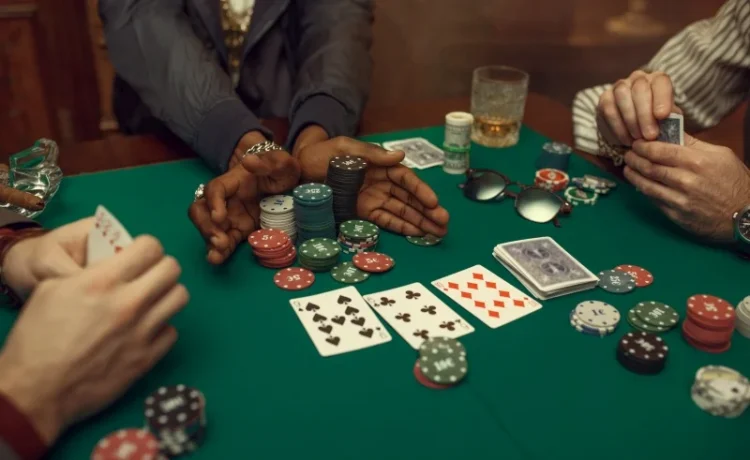
To the casual observer, poker looks like a game centered around psychological warfare, cinematic bluffs, and the immediate strength of a player’s cards. Television broadcasts fuel this perception by highlighting dramatic showdowns and agonizing decisions for a player’s entire chip stack. This media representation convinces many amateur players that poker success hinges entirely on reading a rival’s eyes or waiting for premium starting hands.
In reality, professional poker is a continuous stream of nuanced, clinical decision-making. The game functions as a high-speed optimization problem played under conditions of incomplete information. While professionals view the game through the lens of mathematical variance, position, and long-term expectation, amateurs consistently focus on variables that do not matter. By overlooking the hidden mechanics of high-level play, casual players make structural errors that systematically drain their chips. Mastering the critical decision-making skills that most amateurs ignore can fundamentally transform a player’s approach to the table.
1. Positional Awareness and Range Asymmetry
Amateur players tend to view their two hole cards in a vacuum. If they look down and see an ace and a ten, they evaluate the hand purely on its absolute face value. This is a severe decision-making failure. In Texas Hold’em, the value of your cards is entirely dependent on your position relative to the dealer button.
Position dictates the flow of information. Acting last on every betting round from late position allows you to observe how your opponents react before you have to commit a single chip. Professionals understand that this structural information advantage allows them to play a much wider, more aggressive selection of hands.
Amateurs routinely ignore this dynamic, playing the exact same cards from early position as they would from the button. This creates a severe range asymmetry. When you call an opening bet from early position with a mediocre hand, you force yourself to play the rest of the hand out of position, flying completely blind against opponents who hold both a positional advantage and a stronger range of cards.
2. Understanding Expected Value Over Individual Hand Outcomes
The defining psychological hurdle for an amateur poker player is result-oriented thinking. When a casual player makes a decision, they judge the quality of that choice entirely by whether they won or lost that specific hand. If they call a massive bet with a weak draw and miraculously hit their card on the river to win the pot, they register the play as a success.
Professionals completely decouple their decision-making from short-term outcomes. Instead, they think exclusively in terms of Expected Value, a mathematical calculation of whether a specific action will win or lose chips over a theoretical sample size of one million repetitions.
$$EV = (\text{Probability of Winning} \times \text{Amount to Win}) – (\text{Probability of Losing} \times \text{Amount to Lose})$$
If an action carries a positive Expected Value, a skilled player will execute it every single time, completely unbothered if they lose their entire stack on that specific deal due to a bad run of cards. They recognize that short-term luck is mere statistical noise. Until an amateur stops chasing the instant gratification of winning individual pots and starts focusing entirely on maximizing their long-term mathematical expectation, they will remain trapped in a cycle of impulsive, sub-optimal choices.
3. The Mathematics of Pot Odds vs. Implied Odds
Most amateurs have a rudimentary understanding of pot odds. They can loosely calculate that if a pot holds one hundred dollars and an opponent bets fifty dollars, they must risk fifty dollars to win a total of two hundred dollars, giving them four-to-one odds on a call. They compare these odds to their probability of hitting a winning card to make a basic mathematical decision.
Where amateurs completely falter is the advanced application of implied odds. Implied odds do not just look at the money currently sitting in the pot; they calculate how much additional money you can realistically extract from your opponent on future betting rounds if you manage to hit your disguised draw.
The Mechanics of Implied Odds Valuation
Evaluating implied odds requires reading the psychological profile of your opponent and the depth of the chip stacks. For instance:
-
High Implied Odds: Facing a highly aggressive, wealthy player who holds a massive stack of chips and a visible attachment to a strong top-pair hand. If you hit your hidden set or straight, you are highly likely to take their entire stack.
-
Low Implied Odds: Facing a tight, conservative player with a very short stack of chips who will instantly fold the moment a scary card arrives on the board.
Amateurs consistently overpay to chase draws when their implied odds are non-existent, and conversely, they fold profitable speculative hands because they fail to see the massive future payoffs waiting on the later streets.
4. Exploiting Inelastic Betting Ranges
A major concept that escapes casual players is the difference between elastic and inelastic calling ranges. When a professional player chooses a bet size, they do not pick a number at random or rely on a generic template. They choose a specific layout based on how sensitive their opponent is to price changes.
An elastic range means the opponent’s behavior will change based on the size of the bet. If you bet fifty dollars, they will call; if you bet one hundred and fifty dollars, they will fold. An inelastic range means the opponent has already mentally locked into a decision, and the exact dollar amount of the bet will not change their mind.
Amateurs ignore this psychological state entirely. When they hold an incredibly powerful hand against a stubborn calling station who has clearly locked into a mediocre pair, the amateur will often place a small, safe bet out of fear of scaring them away.
A professional recognizes that the calling station’s mind is completely inelastic in that moment—they are going to call a bet regardless of the price tag. The pro will purposely place an uncomfortably large bet, extorting the absolute maximum amount of value from an opponent who refuses to look at the math.
5. Conscious Decoupling of Emotional Ego and Information Gathering
Amateur poker is heavily driven by ego, pride, and personal grievances. If a casual player gets bluffed off a hand or loses a pot to a specific opponent, they often internalize the event as a personal insult. Their subsequent decisions are driven by a desire for revenge, leading to reckless bets, wide opening ranges, and emotional instability, commonly known as tilt.
Professionals treat every chip movement and showdown purely as an information-gathering exercise. If a professional gets caught bluffing or encounters a hostile opponent, they do not experience an emotional response. Instead, they log the data into their mental spreadsheet.
They analyze how fast the opponent clicked their chips, what starting cards they showed up with at the river, and how their physical mannerisms shifted during the confrontation. This emotional detachment allows them to treat the game like a clinical science laboratory, turning the raw data gathered from past conflicts into a targeted strategy to exploit those exact same players later in the session.
6. The Execution of Functional Fold Equity
To an amateur, betting is used for two simple reasons: to build a pot with a strong hand or to scare someone out with a total bluff. They completely miss the intermediate concept of functional fold equity. Fold equity is the mathematical probability that one or more of your opponents will fold their cards in response to your bet, handing you the pot without a showdown.
Professionals use fold equity to weaponize semi-bluffs. When a professional raises a bet with a four-card flush draw, they are not hoping to get called. They are using the aggressive bet to put immense pressure on an opponent’s weak pairs, forcing them to fold immediately.
If the opponent folds, the pro wins a decent pot right there. If the opponent calls, the pro still has a strong backup plan because their draw can hit on the next card to create an unbeatable hand. Amateurs pass up these highly profitable semi-bluffing scenarios, preferring to play their draws passively by checking and calling, which robs them of their fold equity and leaves their financial fate entirely up to chance.
Conclusion
The vast divide between professional poker players and amateurs has very little to do with card luck or mystical psychological reads. It is the structural integrity of their decision-making frameworks. Professionals consistently operate with deep positional awareness, calculate long-term expected value, assess implied odds, analyze the price sensitivity of their opponents, and weaponize their fold equity with absolute emotional detachment. By systematically shifting your focus away from the superficial drama of individual hands and mastering these hidden strategic layers, you can elevate your poker play from a casual gamble into a highly profitable game of skill.
Frequently Asked Questions
What exactly is the difference between a linear range and a polarized range in poker?
A linear range consists of a continuous stream of strong hands, ranking from premium aces down to solid medium pairs, which a player uses to value-bet sequentially. A polarized range consists of two distinct extremes: incredibly powerful premium hands at the top and total bluffs or drawing hands at the bottom, completely skipping medium-strength cards to keep opponents guessing.
How does stack-to-pot ratio affect a player’s decision to commit to a drawing hand?
The stack-to-pot ratio measures the size of the chips remaining in the players’ stacks compared to the total money already sitting in the pot. A low ratio means you are financially committed to the pot and cannot fold even a mediocre draw, while a high ratio gives you deep maneuvering room to calculate complex implied odds and walk away if the price becomes too high.
Why is check-raising from the big blind considered a vital defensive skill against late-position raisers?
Players on the dealer button frequently place small bets with weak cards simply to steal the pot using their positional advantage. By executing a calculated check-raise from the big blind, you punish their wide, aggressive ranges, force them to pay a high premium to see future cards, and protect your chips from being constantly drained by late-position players.
What is a blocker card and how does it influence a player’s decision to execute a river bluff?
A blocker is a card held in your own hand that mathematically prevents your opponent from holding a specific combination of winning cards. For example, if you hold the king of spades on a board featuring four spades, you block your opponent from holding the absolute best possible flush, giving you the perfect statistical card architecture to execute a massive, uncallable bluff.
How do you accurately identify whether an opponent is playing an elastic or inelastic strategy?
You observe their reactions to varying bet sizes over multiple hands. If an opponent consistently folds to a two-thirds pot bet but calls a half-pot bet, their range is highly elastic. If they call a massive over-bet with the exact same weak middle-pair card that they would use to call a tiny minimum bet, their psychological profile is completely inelastic.
Why do professional poker players rarely use a generic static bet size across different board textures?
Board textures can be dynamic and highly connected (such as cards close in rank or matching suits) or completely dry and disconnected. A professional adjusts their bet size because connected boards contain numerous active draws that require you to charge opponents a high price to chase, whereas dry boards require smaller bets to extract value from weak hands that would fold to large sizes.
What does it mean to have a range advantage vs. a nut advantage on a specific flop?
A range advantage means the full collection of cards you could realistically hold has a higher average equity percentage against your opponent’s full collection of cards. A nut advantage means your specific range contains the absolute best possible combinations on that board layout, such as top sets or top straights, allowing you to dictate the size of the betting lines with maximum aggression.
